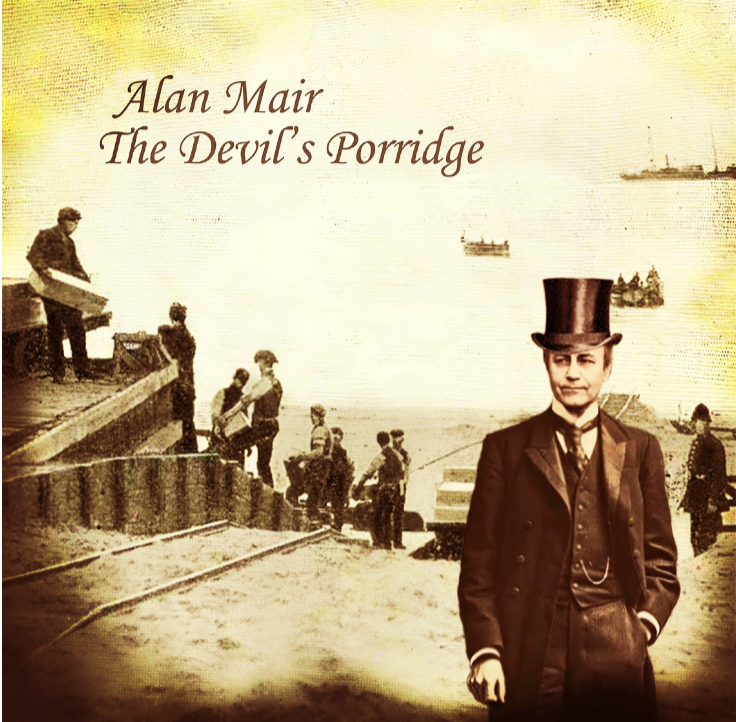

Alan Mair, the Scottish rock legend that originally played bass with The Only Ones, recently released his latest single, titled “The Devil’s Porridge,” on June 17th. In “The Devil’s Porridge,” Alan Mair aims to shine a light on the people that history tends to forget and the artist is able to do so by focusing on the life of Alfred Nobel, the man for which the Nobel Prize is named, and the working class that is historically overlooked.
Alan Mair’s depiction of Alfred Nobel’s story begins after a factory explosion in Sweden. Nobel had been forbidden to manufacture dynamite in Sweden after the aforementioned explosion because many workers, including his own brother, perished during the explosion.
Nobel then traveled to Scotland where he would establish the largest explosive factory in the world, in which thousands of female workers suffered because of the poor working conditions. One way in which these women suffered came from their skin turning yellow and their hair turning green, as a result of the Cordite mix.
These female workers would receive the nickname “The Canary Girls” for their appearance, which only added to the pain and hardships that these workers had to endure to survive. For years this kind of suffering would continue to the point that there were yellow babies being born and acetone addiction became a serious issue. These conditions continued throughout World War I and Nobel’s factory workers were the backbone of their country’s war efforts. It is clear to see why Alan Mair thought it was necessary to tell these workers’ stories, since history often does not consider all of the hardships the working class has had to endure.
Be sure to check out Alan Mair’s “The Devil’s Porridge” on your favorite streaming platform and don’t forget to follow Alan Mair on Facebook!
Connect With Alan Mair
Words by Brendon Gardner